
How to Choose the Right Website Package for Your Finnish Business
Choosing a website package is not simply a question of finding the lowest price. For a Finnish business, the right website should support how you actually operate: attracting local customers, generating enquiries, presenting your services clearly, protecting customer data, and giving you room to grow.
The challenge is knowing what you actually need. A small consultant in Helsinki does not need the same website as an online retailer, construction company, restaurant, SaaS startup, or professional services firm.
This guide explains what to look for when comparing website packages in Finland, what features are worth paying for, where businesses often overspend, and how to choose a website that can deliver value long after launch.
Start With Your Business Goal, Not the Number of Pages
One of the easiest mistakes is to compare website packages based on page count: five pages, ten pages, twenty pages and so on.
Page count matters, but it should not be the starting point. First ask what you want your website to achieve.
- Do you want more phone calls and enquiries?
- Do you want customers to book appointments online?
- Do you need to sell products?
- Do you want to rank on Google for local searches?
- Do you need to establish credibility for a new company?
- Do you need a platform that connects with other business systems?
For example, a Helsinki-based renovation company might benefit more from strong service pages, project photography, local SEO, enquiry forms and clear calls to action than from an expensive customer portal.
Meanwhile, a growing software company may need authentication, dashboards, APIs, subscriptions and custom backend functionality. Those are fundamentally different projects, even if both companies initially ask for "a website".
What Should a Professional Website Package Include?
A professional website package should cover more than colours, fonts and a homepage. Before comparing prices, look carefully at what is actually included.
Responsive Design
Your website should work properly across phones, tablets, laptops and large desktop screens.
This is particularly important for local businesses. A potential customer searching for a service on their phone should be able to understand what you offer, find your contact details and take action without zooming, scrolling through broken layouts or waiting for oversized images to load.
Professional UI and UX
Good design is not decoration. It determines how quickly visitors understand your business and whether they can find the information they need.
A strong website should establish a clear visual hierarchy. The visitor should immediately understand:
- What the business does.
- Who it serves.
- Why they should trust it.
- What action they should take next.
Basic SEO
SEO should be considered during development rather than added as an afterthought.
At a minimum, a professional package should provide a technically sound foundation including descriptive page titles, meta descriptions, logical heading structures, clean URLs, image alt text, internal linking and a crawlable site structure.
If you operate in Finland, your strategy may also need to consider location-specific searches such as "web design Helsinki", "website development Finland", or searches in Finnish and Swedish depending on your customer base.
Performance Optimisation
A website can look excellent and still perform poorly.
Large images, unnecessary JavaScript, inefficient plugins and poorly configured hosting can make a website slow. This affects user experience and can make it harder for visitors to complete important actions.
Ask your developer how images, caching, scripts, fonts and hosting will be handled before you purchase a package.
Which Website Package Is Right for a Small Business?
For many small Finnish businesses, a focused business website is the best starting point.
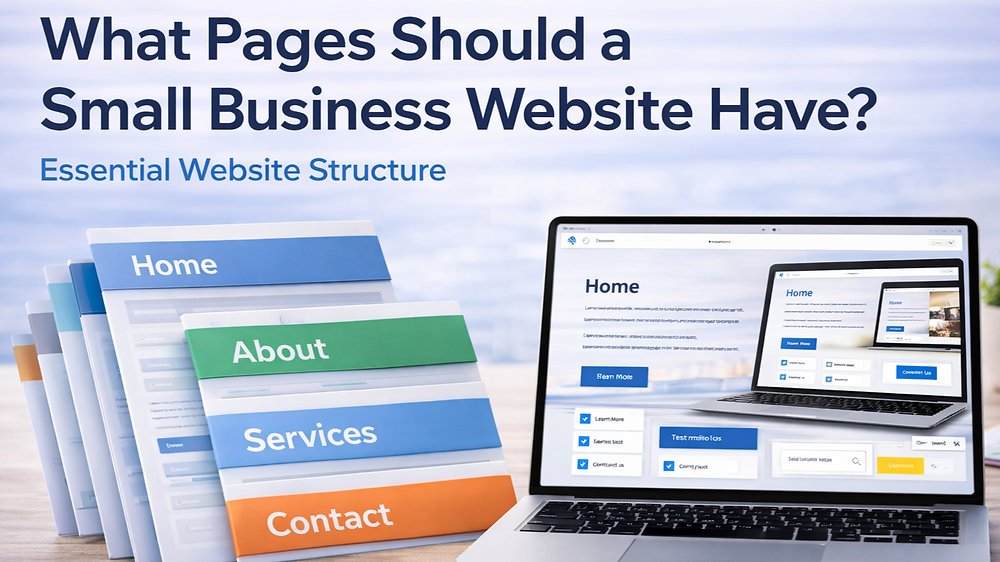
A typical structure might include:
- Home
- About
- Services
- Individual service pages
- Portfolio or projects
- FAQ
- Contact
- Blog or insights
The important part is not having all of these pages automatically. It is having the pages that support the customer journey.
For example, imagine a cleaning company operating in Espoo and Helsinki. Instead of building 25 pages immediately, it may be more effective to create a polished homepage, detailed service pages, location-relevant content, strong enquiry forms and useful information that answers customer questions.
Once the business starts generating traffic, additional content can be added based on real customer demand and search behaviour.
When Should You Choose a More Advanced Website Package?
A larger package becomes worthwhile when the website needs to perform business processes rather than simply present information.
You may need a more advanced solution if you require:
- Online booking
- Customer accounts
- Membership functionality
- Payment processing
- Subscriptions
- Custom dashboards
- CRM integrations
- Third-party APIs
- Advanced search and filtering
- Multilingual functionality
- Custom business workflows
At this point, the distinction between a "website" and a "web application" becomes important.
A marketing website primarily communicates information. A web application allows users and businesses to perform tasks.
If your website needs to calculate prices, manage bookings, process subscriptions, communicate with an external API or provide a private customer dashboard, a custom development approach may provide significantly more value than trying to force everything into a standard template.
WordPress, Laravel or Custom Development?
The technology behind your website matters, but there is no universally superior platform.
WordPress can be a practical choice for businesses that need a content-driven website and want to manage pages, blog posts and other content through a CMS.
Laravel can be a better fit when the project requires custom application logic, integrations, authentication, complex workflows or a system designed around specific business requirements.
For example, a five-page company website may not need a custom Laravel application. Building a complex system for such a project could add unnecessary cost.
On the other hand, a company that needs a customer portal, subscription system, booking engine and several API integrations may benefit from a framework such as Laravel rather than depending on a collection of unrelated plugins.
The correct question is therefore not "Which technology is best?"
The better question is:
Which technology gives my business the right combination of cost, flexibility, security, maintainability and scalability?
Do You Need SEO Included in Your Website Package?
If customers find your business through Google, SEO should be part of the website conversation from the beginning.
There is an important distinction between SEO-ready and ongoing SEO.
SEO-ready means the website is technically structured so search engines can understand and crawl it properly.
Ongoing SEO is a continuing marketing activity involving content, keyword research, technical improvements, internal linking, search performance analysis and optimisation.
A website package can provide the first without automatically providing the second.
Before signing a proposal, ask exactly what "SEO included" means. If the answer is simply "we add keywords", that is not a complete SEO strategy.
Local SEO Matters for Finnish Businesses
If you serve customers in a specific Finnish city or region, local visibility can be more valuable than trying to rank nationally.
A Helsinki-based electrician, salon, accounting firm or renovation company may receive more business from appearing for relevant local searches than from attracting visitors from hundreds of kilometres away.
Your website should make your service area clear and provide useful, genuinely relevant information for the locations you serve.
Local SEO can also work together with your Google Business Profile, customer reviews, structured information and location-specific landing pages where those pages provide real value.
Don't Forget GDPR and Data Protection
For businesses operating in Finland and the European Union, data protection should be considered when choosing a website package.
Your website may process personal information through:
- Contact forms
- Booking systems
- Newsletter subscriptions
- Customer accounts
- Analytics
- Payment systems
- Cookies and tracking technologies
This means your technical setup should be considered alongside your privacy requirements.
For businesses that want their website infrastructure managed with European requirements in mind, AMA IT works with GDPR-conscious solutions, EU hosting options, security monitoring and ongoing technical support as part of broader website and application projects.
However, technical configuration alone does not make a business GDPR compliant. Privacy notices, processing purposes, consent mechanisms and other legal requirements should be reviewed according to the actual data processing involved.
Security Should Not Be an Optional Extra
Security is easy to ignore when everything is working.
It becomes very important when something goes wrong.
Depending on your website architecture, security considerations may include:
- HTTPS and SSL configuration
- Secure authentication
- Software and dependency updates
- Access control
- Backups
- Server hardening
- Monitoring
- Protection against common web vulnerabilities
A business website may remain online for years. A package that only covers development but provides no sensible maintenance strategy can leave you responsible for keeping the system secure after launch.
Hosting: What Are You Actually Paying For?
Hosting is another area where cheap packages can become confusing.
Ask whether hosting is included and, if so, what kind of hosting environment is being provided.
You should understand:
- Where the website is hosted.
- What resources are available.
- How backups are handled.
- Whether SSL is included.
- How the server is monitored.
- What happens if the website becomes unavailable.
- Whether you can move the website to another provider.
For a small brochure website, basic hosting may be perfectly adequate. A high-traffic application, eCommerce store or SaaS platform may require a completely different infrastructure.
Website Ownership Is a Critical Question
Before purchasing a website package, ask one simple question:
Who owns the website after it is finished?
Ideally, you should have clarity around ownership and access to your domain, website content, hosting account, CMS and other important assets.
Be particularly careful with packages that lock your website into a proprietary system without clearly explaining what happens if you stop using the provider.
Your website is a business asset. You should understand what you are buying.
How Much Should a Website Cost in Finland?
There is no single correct price for a business website.
A simple website with a limited number of pages and standard functionality requires considerably less work than a custom web application with integrations, authentication and complex business logic.
Instead of asking only, "How much does a website cost?", break the proposal into its components:
- Strategy and planning
- UX and UI design
- Development
- Content preparation
- SEO
- Integrations
- Hosting
- Security
- Testing
- Launch
- Maintenance
For example, a €1,500 website and a €5,000 website may appear expensive compared with each other, but the difference becomes easier to understand when the second project includes custom UX, ten service pages, technical SEO, analytics, integrations, performance optimisation and ongoing support.
Price should always be evaluated against scope and expected business value.
Three Common Website Buying Mistakes
1. Choosing the Cheapest Package
The cheapest package can be a good solution when your requirements are genuinely simple. The problem is assuming that a low initial price automatically means a low total cost.
If you later need to rebuild the website, migrate content or replace incompatible functionality, the initial saving can disappear quickly.
2. Paying for Features You Will Never Use
The opposite mistake is buying a huge package because it sounds impressive.
If your business only needs a professional service website, you may not need customer accounts, a complex dashboard, advanced filtering or custom automation.
Build what creates value now, while keeping the architecture capable of supporting future growth.
3. Treating the Website as a One-Time Project
Launching the website is only the beginning.
Businesses change. Services change. Search behaviour changes. Security vulnerabilities are discovered. Content becomes outdated.
A sensible maintenance plan can include updates, backups, security monitoring, performance checks and technical support.
A Simple Framework for Choosing Your Website Package
Use this framework before requesting quotes from agencies or developers.
- Define the business goal. Decide whether the primary objective is leads, sales, bookings, credibility or something else.
- Define the customer. Identify who will use the website and what information they need before contacting or buying from you.
- List essential functionality. Separate must-have features from nice-to-have features.
- Decide your content requirements. Determine how many services, products, locations or articles need dedicated pages.
- Consider SEO. Decide whether you need basic SEO foundations or an ongoing organic growth strategy.
- Consider security and privacy. Identify what personal data the website will process.
- Plan for the next 2–3 years. Choose a platform that can grow without forcing an unnecessary rebuild.
- Compare complete proposals. Look at scope, ownership, support and maintenance — not just the headline price.
What the Right Package Looks Like at Different Business Stages
New Business
Start with a professional, focused website that establishes credibility and makes it easy for potential customers to contact you.
Established Local Business
Prioritise service pages, local SEO, conversion optimisation, reviews, strong calls to action and reliable maintenance.
Growing Company
Consider a more flexible platform with integrations, better content management and an architecture that can support additional functionality.
Online Store
Choose an eCommerce-focused solution with secure checkout, payment integration, product management, analytics and eCommerce SEO.
Digital Product or SaaS Business
Think beyond a traditional website. You may need custom application development, authentication, databases, APIs, subscriptions, dashboards and monitoring.
Questions to Ask Before Signing a Website Contract
Before committing to a package, ask the provider:
- What exactly is included in the price?
- How many pages are included?
- Is the design custom or template-based?
- Is mobile optimisation included?
- What SEO work is included?
- Who owns the domain and website?
- Where is the website hosted?
- Are backups included?
- How is security handled?
- What happens after launch?
- How much do future changes cost?
- Can the website be expanded later?
- What happens if I want to move to another provider?
A professional provider should be able to answer these questions clearly.
The Best Website Package Is the One That Fits Your Business
There is no universal best website package.
A five-page website can be exactly right for one company and completely inadequate for another.
The right choice depends on your business model, customers, growth plans, functionality, content, SEO requirements and budget.
If you are a Finnish business looking for a website, start by defining what you want the website to accomplish. Then choose the technology, features and level of support that can achieve that goal without unnecessary complexity.
AMA IT works across website design, Laravel and Node.js development, security, EU-focused hosting and ongoing technical support. For a straightforward business website, that might mean keeping the technology simple. For a more demanding digital platform, it can mean designing a custom solution around the company's actual workflow.
The goal should always be the same: build a website that works for the business, not simply a website that exists.
Ready to Choose Your Website Package?
If you are unsure which type of website your Finnish business actually needs, start with your goals and requirements rather than choosing a package based on page count or price alone.
A good website should make your business easier to find, easier to trust and easier to contact — while giving you a solid technical foundation for the future.
Choose the package that fits your business today, but make sure it can grow with you tomorrow.
Published by
Armin khorami dastjerdi
